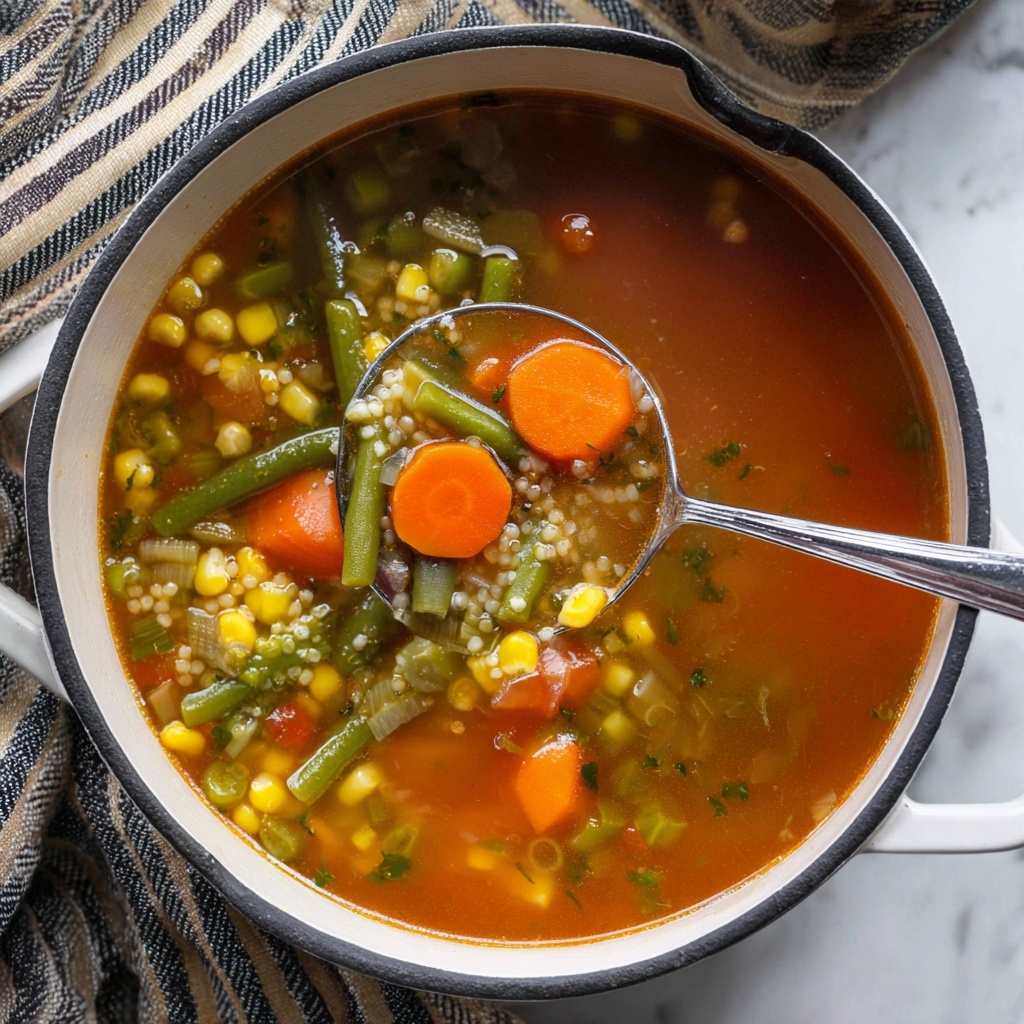
If you are searching for a cozy and nourishing meal that bursts with fresh flavors and vibrant colors, this Vegetable Soup Recipe is going to become your new favorite. It’s packed with an array of wholesome vegetables simmered to perfection in a fragrant broth seasoned with herbs that bring everything together beautifully. Whether you want a light lunch or a comforting dinner, this soup satisfies cravings while making you feel warm and nourished from the inside out.
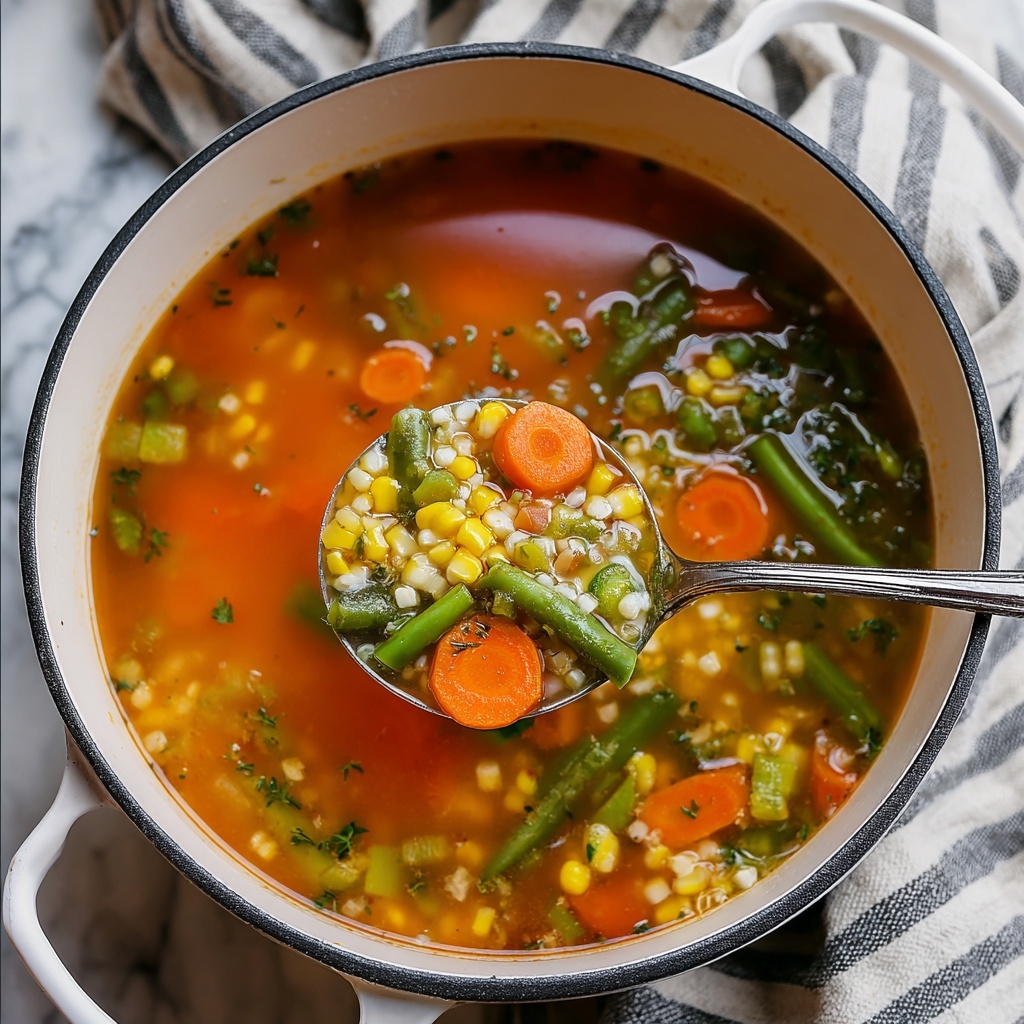
Ingredients You’ll Need
The magic of this Vegetable Soup Recipe lies in its simplicity and the wonderful combination of fresh and pantry ingredients. Each one plays a key role in building layers of flavor, texture, and color to create a soup that’s as appealing to the eye as it is to the palate.
- 2 tablespoons olive oil: Adds a silky richness and helps soften the vegetables.
- 1 large onion, diced: Provides a sweet, savory base that enhances the depth of flavor.
- 3 cloves garlic, minced: Infuses the soup with a warm, aromatic punch.
- 2 large carrots, peeled and sliced: Bring a gentle sweetness and pleasant crunch.
- 2 celery stalks, sliced: Adds a subtle freshness and light herbal note.
- 2 medium potatoes, peeled and diced: Offer comforting creaminess and help thicken the broth naturally.
- 1 zucchini, diced: Provides a tender bite and mild flavor that balances the soup.
- 1 yellow squash, diced: Adds color contrast and a slightly sweet, nutty taste.
- 1 cup green beans, trimmed and cut into 1-inch pieces: Lend a crisp texture and vibrant green hue.
- 1 cup corn kernels (fresh or frozen): Bring delightful bursts of sweetness.
- 1 cup peas (fresh or frozen): Add a pop of color and natural sweetness.
- 1 can (14.5 oz) diced tomatoes: Provides acidity and a rich tomato base.
- 6 cups vegetable broth: The essential liquid that carries all flavors and keeps the soup hearty.
- 1 teaspoon dried thyme: Adds an earthy, slightly minty herbal note.
- 1 teaspoon dried basil: Brings a sweet, peppery aroma with hints of anise.
- 1/2 teaspoon dried oregano: Introduces a robust, slightly bitter edge that complements the other herbs.
- Salt and pepper to taste: Enhances all the natural flavors beautifully.
- 2 tablespoons fresh parsley, chopped (for garnish): Offers a burst of fresh color and subtle brightness when serving.
How to Make Vegetable Soup Recipe
Step 1: Sauté the Aromatics
Start by heating olive oil in your largest pot over medium heat. Toss in the diced onion and let it gently cook for about 5 minutes until it becomes soft and translucent. This slow softening brings out the natural sweetness of the onions, creating the perfect aromatic base for the soup.
Step 2: Add Garlic for Warmth
Next, add the minced garlic and cook for just one more minute. You want it fragrant but not browned to keep the delicate garlic flavor vibrant and tender, which will add a lovely warmth that carries through the entire soup.
Step 3: Cook Hearty Root Vegetables
Introduce the sliced carrots, celery, and diced potatoes to the pot. These root vegetables take a bit longer to soften, so sautéing them for about 5 minutes while stirring occasionally helps them start to tenderize and develop their sweetness. The potatoes also begin lending a creamy body to the stew as they cook.
Step 4: Add Mid-Texture Vegetables
Now, stir in the zucchini, yellow squash, green beans, corn, and peas. These vegetables cook more quickly and bring a wonderful variety in texture and fresh garden flavors that brighten the soup at this stage.
Step 5: Pour in Tomatoes, Broth, and Herbs
Pour the canned diced tomatoes with their juice and all 6 cups of vegetable broth into the pot. Sprinkle in the dried thyme, basil, and oregano along with salt and pepper to your taste. Stir everything together so all the elements are well combined, setting the stage for all those flavors to meld beautifully.
Step 6: Let It Simmer to Perfection
Bring the soup to a boil and then immediately reduce the heat to low, letting it simmer gently for 25 to 30 minutes. This slow simmer softens all the vegetables perfectly while allowing the herbs and broth to infuse deeply, creating a harmonious blend that’s comforting and delicious.
Step 7: Final Seasoning and Serve
Before serving, taste the soup and adjust salt and pepper as needed. Don’t forget to sprinkle fresh chopped parsley on top for a burst of vibrant color and fresh flavor that adds a lovely finishing touch.
How to Serve Vegetable Soup Recipe
Garnishes
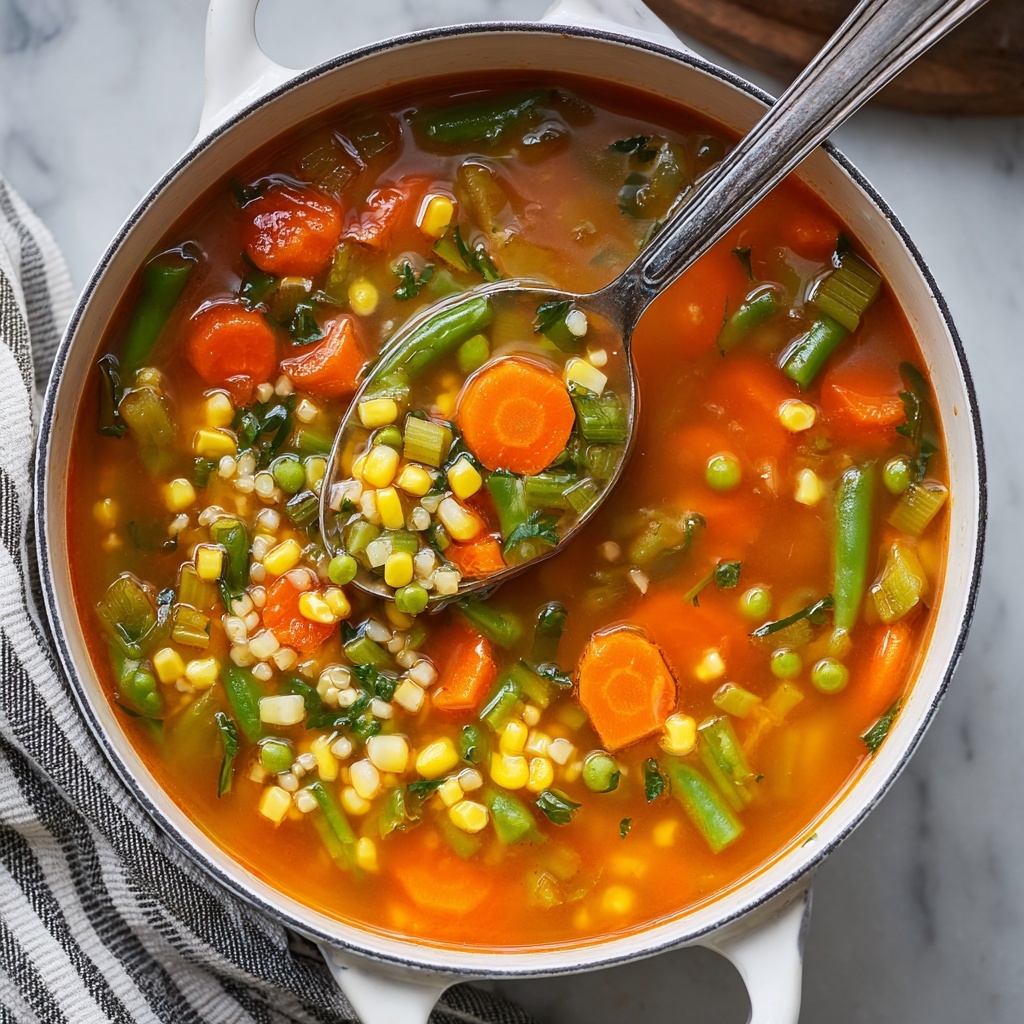
Fresh parsley is a classic way to brighten a bowl of vegetable soup. You can also add a sprinkle of grated Parmesan cheese or a dollop of sour cream for extra richness. A little drizzle of good-quality olive oil adds a subtle fruity note, elevating the presentation and flavor.
Side Dishes
This soup pairs wonderfully with crusty bread, garlic toast, or warm cornbread to soak up every last drop. For a wholesome meal, serve alongside a crisp green salad or a simple grain like quinoa or brown rice, making it both filling and balanced.
Creative Ways to Present
Serve the soup in rustic mugs or hollow out sourdough bread bowls for a fun, inviting twist. You can also garnish with toasted nuts, seeds, or fresh herbs like thyme or basil to add texture and a pop of aroma. These small touches make the meal feel special and thoughtfully prepared.
Make Ahead and Storage
Storing Leftovers
Vegetable soup tastes even better the next day once the flavors have melded. Store leftovers in airtight containers in the refrigerator for up to 4 days. Make sure to cool the soup completely before refrigerating to preserve freshness.
Freezing
This Vegetable Soup Recipe freezes beautifully. Portion it into freezer-safe containers or bags, leaving enough space for expansion, and freeze for up to 3 months. It’s perfect for meal prep or quick comfort food on busy days.
Reheating
Reheat the soup gently in a pot on the stove over medium-low heat, stirring occasionally until warmed through. If the soup has thickened too much after refrigeration or freezing, simply add a splash of vegetable broth or water to reach your preferred consistency.
FAQs
Can I use frozen vegetables for this Vegetable Soup Recipe?
Absolutely! Frozen vegetables are a convenient, time-saving option and still provide great flavor and nutrition. Just note that frozen veggies may require a slightly shorter cooking time to avoid becoming mushy.
Is this soup suitable for vegan diets?
Yes, this Vegetable Soup Recipe is entirely plant-based. Just be sure to use vegetable broth rather than any meat-based stock to keep it vegan-friendly.
Can I add beans or lentils to make it more filling?
Definitely! Adding cooked beans or lentils not only boosts the protein content but adds heartiness to the soup, making it a more substantial meal.
How can I make this soup spicier?
Try adding red pepper flakes, a dash of cayenne pepper, or diced jalapeños when adding the herbs and spices. This will give the soup a warm kick without overwhelming the fresh vegetable flavors.
What are some good herbs to use if I don’t have thyme or basil?
Italian seasoning blends, rosemary, or marjoram can be excellent alternatives that complement the vegetables nicely. Feel free to experiment with what you have to find your favorite combination!
Final Thoughts
This Vegetable Soup Recipe is a wonderful way to enjoy a healthy, homemade meal full of comforting flavors and vibrant textures. It’s easy to make, versatile, and perfect for sharing with family or friends. I wholeheartedly encourage you to give it a try — your kitchen will smell amazing, and you’ll have a delicious bowl of goodness to dive into that feels like a warm hug on any day.
Print
Vegetable Soup Recipe
- Prep Time: 15 minutes
- Cook Time: 35 minutes
- Total Time: 50 minutes
- Yield: 8 servings
- Category: Soup
- Method: Stovetop
- Cuisine: American
- Diet: Vegetarian
Description
A hearty and wholesome vegetable soup packed with a variety of fresh vegetables and herbs, simmered to perfection in a flavorful vegetable broth. This comforting soup is perfect for a nutritious meal that’s both delicious and easy to prepare.
Ingredients
Vegetables and Aromatics
- 2 tablespoons olive oil
- 1 large onion, diced
- 3 cloves garlic, minced
- 2 large carrots, peeled and sliced
- 2 celery stalks, sliced
- 2 medium potatoes, peeled and diced
- 1 zucchini, diced
- 1 yellow squash, diced
- 1 cup green beans, trimmed and cut into 1-inch pieces
- 1 cup corn kernels (fresh or frozen)
- 1 cup peas (fresh or frozen)
- 1 can (14.5 oz) diced tomatoes
Liquids and Seasonings
- 6 cups vegetable broth
- 1 teaspoon dried thyme
- 1 teaspoon dried basil
- 1/2 teaspoon dried oregano
- Salt and pepper to taste
- 2 tablespoons fresh parsley, chopped (for garnish)
Instructions
- Heat the oil and soften onions: Heat olive oil in a large pot over medium heat. Add diced onion and cook until softened, about 5 minutes.
- Add garlic: Add minced garlic and cook for another minute until fragrant, being careful not to burn it.
- Cook root vegetables: Add sliced carrots, celery, and diced potatoes to the pot. Cook for about 5 minutes, stirring occasionally to slightly soften the vegetables.
- Add other vegetables: Stir in diced zucchini, yellow squash, green beans, corn, and peas, combining them evenly with the other ingredients.
- Incorporate liquids and herbs: Pour in the diced tomatoes with their juice and vegetable broth. Add dried thyme, basil, oregano, salt, and pepper. Stir well to combine all the flavors.
- Simmer soup: Bring the mixture to a boil, then reduce the heat and let it simmer uncovered for 25-30 minutes, or until all the vegetables are tender and the flavors meld.
- Adjust and serve: Taste the soup and adjust seasoning with more salt and pepper if needed. Serve hot, garnished with freshly chopped parsley for a burst of color and freshness.
Notes
- You can use fresh or frozen vegetables; if using frozen, adjust cooking time accordingly as they soften faster.
- For added protein, consider adding cooked beans or lentils.
- The soup tastes even better the next day as the flavors continue to develop.
- Leftovers can be refrigerated up to 4 days or frozen for up to 3 months.
- Customize the herbs as per your preference, fresh herbs can be used but should be added towards the end of cooking.